
At first the home office feels like freedom: no traffic, no worrying about clothes, coffee always within reach. But as the months go by, many people notice their shoulders creeping up towards their ears in the evenings, their neck stiffening and their mind never quite “switching off” at the end of the day. For thousands of people working from home or on a hybrid schedule in Istanbul, this picture is now familiar. In this article we look at massage options for remote workers, the effect of the home office on the body and simple habits you can apply during the day.
How Does the Home Office Affect the Body?
Even in a traditional office, sitting for long periods tires the body; but the home office has some traps of its own. Most homes do not have an ergonomic desk and chair. The laptop is used at the kitchen table, on a dining chair or on the sofa. Because the screen sits below eye level, the head tilts forward and the shoulders roll inwards. On top of that, the natural moments of movement, such as walking to the office, heading to a meeting room or going out for lunch, disappear.
Common complaints among remote workers include:
- Stiffness in the neck and shoulders, especially in the second half of the day
- A feeling of tension in the upper back and between the shoulder blades
- Stiffness in the lower back and hips from sitting for long periods
- Screen fatigue and a feeling of heaviness in the head
- Mental fatigue caused by the blurred line between work and private life
If these complaints are persistent or severe, you should see a doctor. If they are at the level of everyday tension and fatigue, movement, well-planned breaks and professional massage can support relaxation.
Massage for Remote Workers: Which Session and When?
The biggest advantage of massage for remote workers is flexibility. The appointment that office workers have to squeeze in after work, you can place on a meeting-free afternoon or in the middle of the day. Because O’SPA is open every day from 09:00 to 23:00, early mornings and late evenings are also among your options.
Back Massage: For the Load Left by the Screen
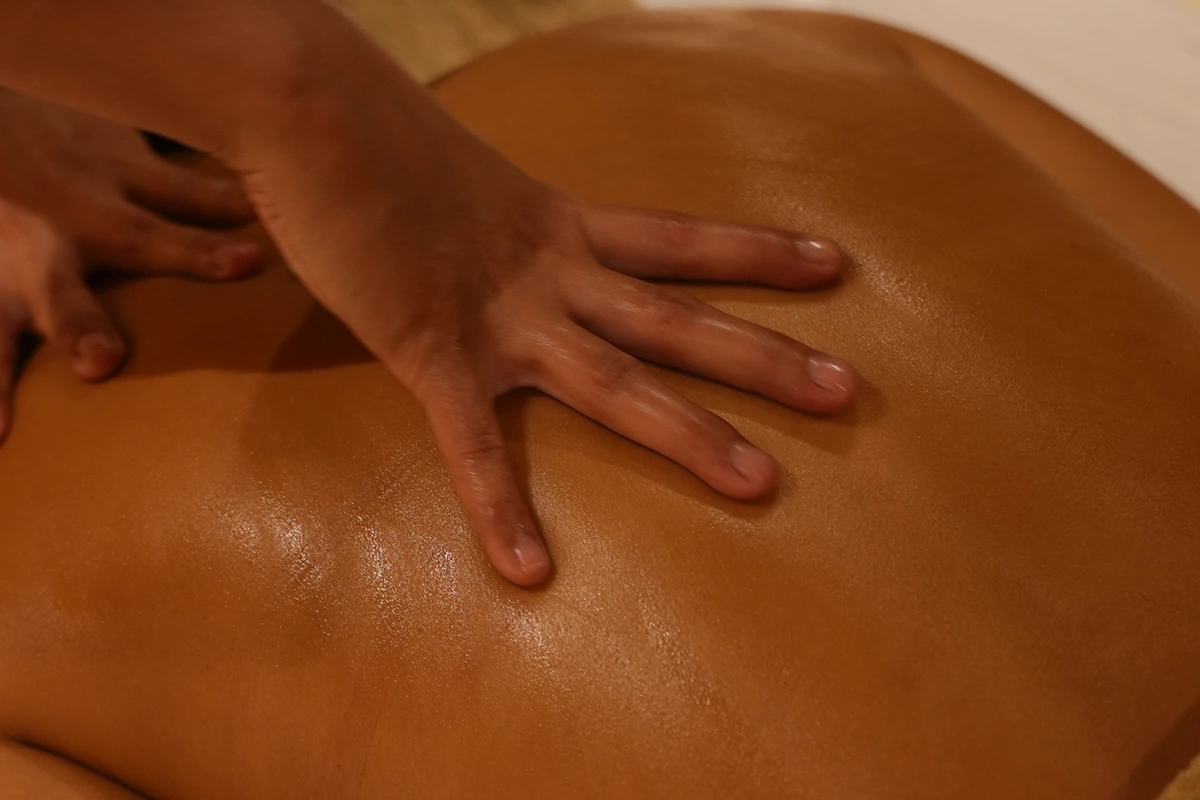
For those who spend most of the day leaning forward, a back massage is the most focused option. This 30-minute session, priced at 3,500 TL, concentrates on the back, shoulders and neck. Thanks to its short length, it can be planned even in the middle of the working day; after the session you can have herbal tea in the relax lounge and return to your desk with a refreshed mind.
Indian Head Massage: When Your Mind Will Not Switch Off
On some days the fatigue is more in the mind than in the muscles. Back-to-back video calls, notification sounds and never-ending emails… Indian head massage is a 30-minute session (3,500 TL) focusing on the head, scalp, neck and shoulders. It is a calm break, especially for those who feel screen fatigue and want to “clear their head”, even briefly.
You can find our suggestions for desk-related tension among office workers in our article on massages for desk-related aches for Levent and Maslak employees; much of it applies to home-office workers too.
Regular Care: A Rhythm Instead of a One-Off
The tension created by the home office usually does not build up in a day; it is the sum of weeks of hours spent in the same position. That is why sessions repeated at a certain rhythm can be more meaningful than a one-off massage. The 5-session massage package consists of five 50-minute sessions and costs 20,000 TL (VAT included). By planning the sessions, for example, every two weeks, you can add a regular “hour for yourself” to your calendar.
If you are struggling to decide whether a package or a single session suits you better, our article massage package or single session? covers the subject in detail.
What You Can Do at Home Between Massages
Massage is only one part of taking good care of yourself. Making small changes to your home office between sessions can make a noticeable difference:
- Bring your screen to eye level; a laptop stand and a separate keyboard can make a big difference.
- Stand up every 45–60 minutes; a few minutes of walking or light stretching is enough.
- Take phone calls standing or walking whenever possible.
- Keep your workspace separate from your bed and sofa, so that both your body and your mind can tell the “workplace” from the “resting place”.
- At the end of the day, close the computer and go for a short walk to mark the end of your working hours.
Getting Out of the House Is a Need, Too
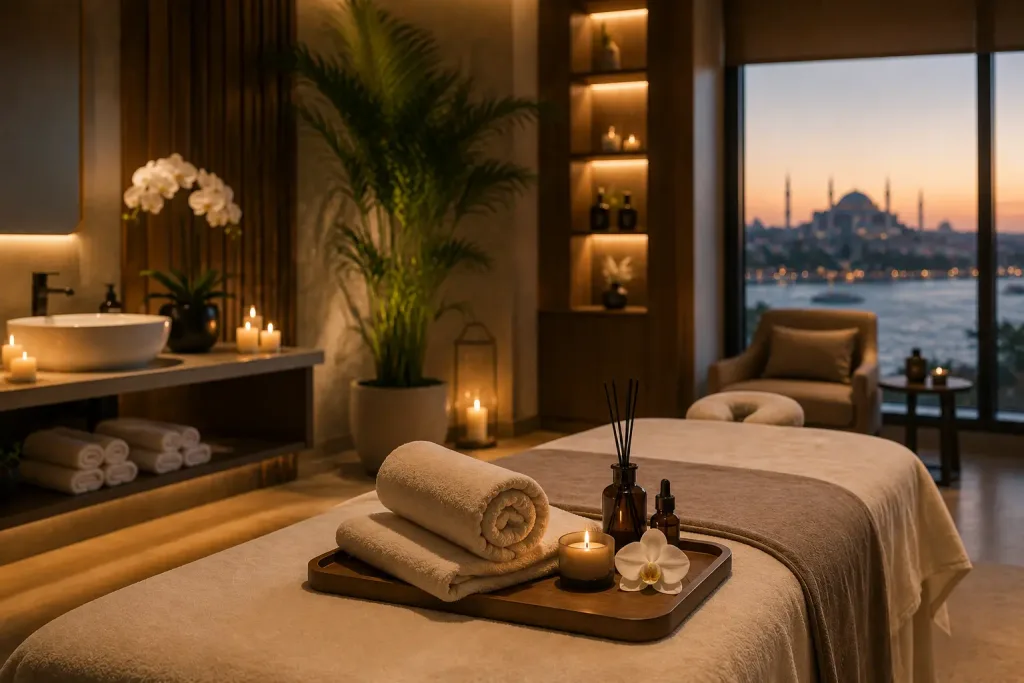
An overlooked side of working from home is that the days are spent within the same four walls. A spa appointment is a good excuse not only for your body but also for a change of scene. An hour spent in a soundproofed massage suite with soft lighting and a warm towel gives a clear break to days when home and office blur together. Spending time in the Finnish-style dry sauna or the steam room before or after your session can extend that break; if you have any question about your health, consult your doctor before using the hot areas.
Skyland Istanbul is located on the city’s northern axis, and there is free indoor parking for guests arriving by car. So even in the middle of the day, a short journey lets you leave the house and make time for yourself.
A Small Plan for Hybrid Workers
For those who spend part of the week in the office and part at home, putting the appointment on the right day matters too. Since office days are usually full of traffic and meetings, planning your massage on one of your home-office days tends to make for a more relaxed experience. For example, you could pick a meeting-free hour in the middle of the week in the afternoon and mark the session as “busy” in your calendar. That way the session becomes a natural part of your working day, and you are less likely to cancel at the last minute.
Frequently Asked Questions
Which massage is best for people who work from home?
For those who feel tension in the neck, shoulders and back, the 30-minute back massage is a good start; for those experiencing mental fatigue and screen fatigue, Indian head massage is a good choice. If you would like a more comprehensive session, 50-minute massages are also an option; describe your needs when booking.
How often should I get a massage?
There is no rule that applies to everyone; it depends on your budget, your calendar and how you feel. Many people find it practical to plan a regular session every two to four weeks. If you have a chronic condition, consult your doctor about frequency.
Does it make sense to go for a massage in the middle of the day and return to work?
Yes, 30-minute sessions in particular are well suited to this. Resting for a few minutes and drinking water after the session, rather than jumping straight into an intense meeting, will help you enjoy the experience more.
If the home office has become a permanent part of your life, make the time you set aside for yourself permanent too. Reach us on WhatsApp or by phone (+90 539 675 76 76); let us find a time that suits your work schedule and plan your first session together.


